Cathetrix returned from WHX Miami 2026 with strong momentum and valuable industry recognition after being selected as a finalist in the prestigious Xcelerate Start-Up Competition, one of the event’s leading showcases for healthcare innovation.
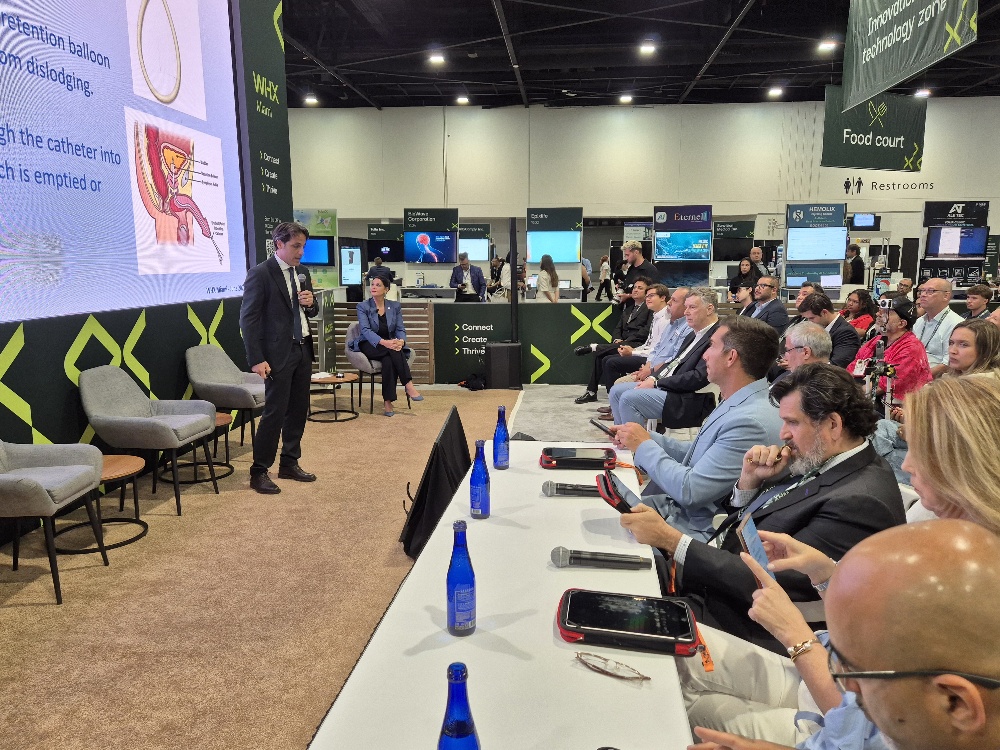
Competing against emerging health tech companies from around the world, Cathetrix advanced to the final round of the competition after presenting its Foley-Safe catheter securement technology on the Future X Stage. While the company ultimately finished fourth overall, reaching the final stage of the competition provided significant validation of both the clinical need and commercial potential of its solution.
Representing Cathetrix during the competition was Dr. Dor Golomb, a member of the company’s advisory board and a practicing urologist. His presentation focused on one of healthcare’s persistent challenges: preventing complications associated with catheter movement, accidental extraction, and catheter-associated infections.
Industry Recognition
Throughout the competition, judges, healthcare professionals, investors, and industry stakeholders showed strong interest in Cathetrix’s approach to catheter securement. Discussions at the event highlighted growing awareness within the U.S. healthcare market of the need for safer and more effective solutions that address preventable catheter-related complications.
Improved Safety and Reduce Complications
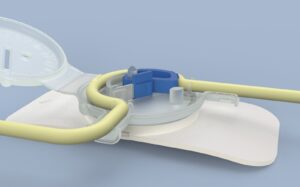
At the center of Cathetrix’s presentation was Foley-Safe, the company’s FDA-cleared catheter securement device. Unlike traditional fixation methods, Foley-Safe is designed to absorb micro-movements that can create mechanical stress and irritation around the catheter insertion site. By minimizing movement and friction, the device may help reduce factors associated with Catheter-Associated Urinary Tract Infections (CAUTIs), one of the most common healthcare-associated infections worldwide.
Preventing Traumatic Extractions
One of Foley-Safe’s distinguishing features is its safety disconnection mechanism. In the event of an accidental pull or patient movement, the device is designed to disconnect in a controlled manner before excessive force reaches the bladder or urethra. This approach helps reduce the risk of traumatic catheter removal and the serious complications that can follow.
Supporting Clinical Efficiency
Industry observers also highlighted the potential economic benefits of the solution. The device’s medical-grade adhesive is designed to remain securely attached for up to 14 days, reducing the need for frequent replacement and helping avoid costly catheter reinsertions caused by accidental dislodgement.
The show provided an opportunity to engage directly with healthcare leaders, distributors, investors, and clinical experts from around the world. More importantly, it reinforced a message that resonated throughout the event: healthcare providers are actively seeking smarter solutions that improve patient safety, reduce preventable complications, and deliver measurable clinical and economic value.